1. Introduction: The industrial plant of the future
Consider a chemical plant in 2070.
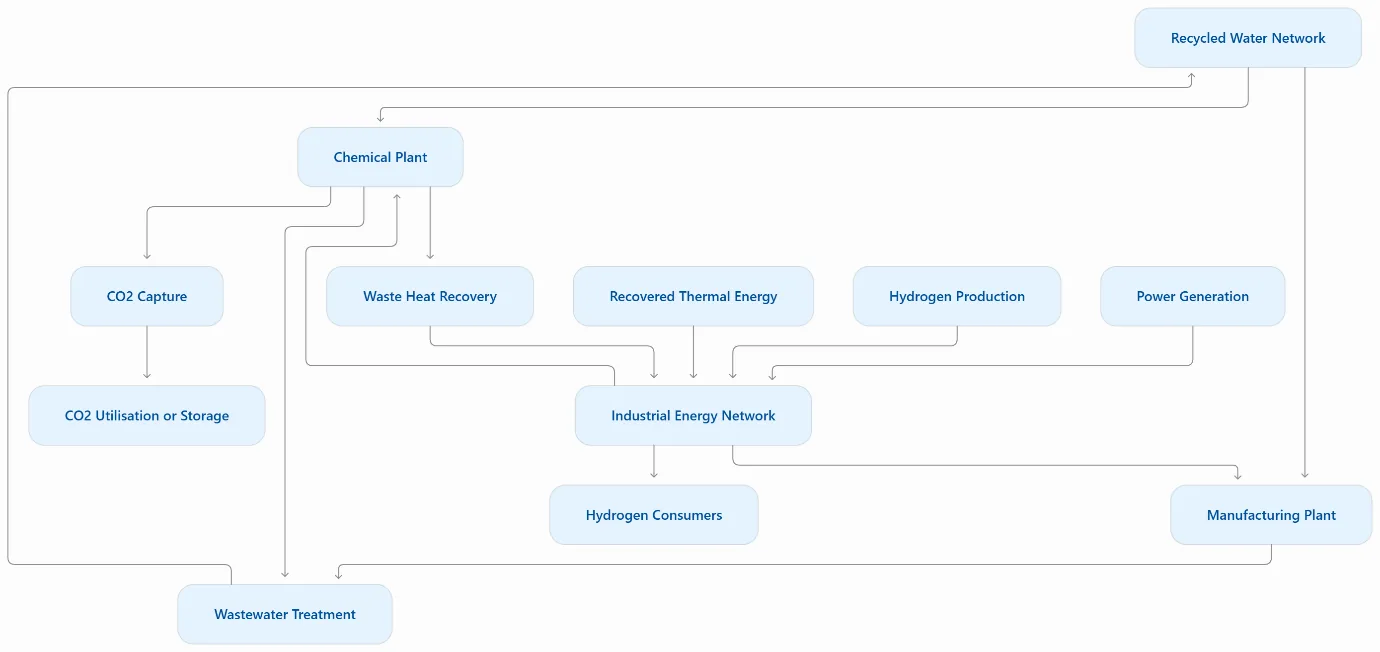
The plant generates excess heat during production. Instead of rejecting this heat through conventional cooling systems, it transfers the energy to a neighbouring manufacturing facility.
Wastewater is treated and reused. Carbon dioxide from industrial processes is captured and directed to suitable utilisation or storage systems. By-products from one process become feedstock for another.
Even the plant's utility systems are interconnected with neighbouring industrial facilities.
The concept is simple:
One industry's waste could become another industry's resource.
This is the potential future of industrial symbiosis and circular manufacturing.
2. From linear manufacturing to circular manufacturing
The conventional industrial model follows a relatively linear pattern:
Raw materials → Production → Product → Waste.
The future model could operate differently:
Raw materials → Production → Recovery → Reuse → Recycling → New production.
This approach could reduce dependence on virgin materials, improve resource utilisation and reduce industrial emissions.
3. The five pillars of the zero-waste industrial plant
Pillar 1 – Zero-liquid-discharge and water recovery
Water could become one of the most strategically managed resources in industrial facilities.
Future plants may integrate:
- Advanced membrane filtration.
- Reverse osmosis.
- Multi-effect evaporation.
- Mechanical vapour recompression.
- Selective ion recovery.
- Advanced wastewater treatment.
- Recovered water distribution networks.
The objective is to maximise reuse while managing concentrated residual streams, energy consumption and treatment by-products.
Pillar 2 – Waste heat recovery
Industrial facilities reject significant quantities of energy through hot process streams, flue gases, cooling systems and equipment.
Future plants could recover and redistribute more of this energy.
Potential technologies include:
- High-temperature heat pumps.
- Industrial heat exchangers.
- Thermal batteries.
- Advanced heat recovery networks.
- Organic Rankine cycle systems.
- Industrial heat integration.
A chemical plant's waste heat could become an energy source for a neighbouring process facility.
Pillar 3 – Carbon capture and utilisation
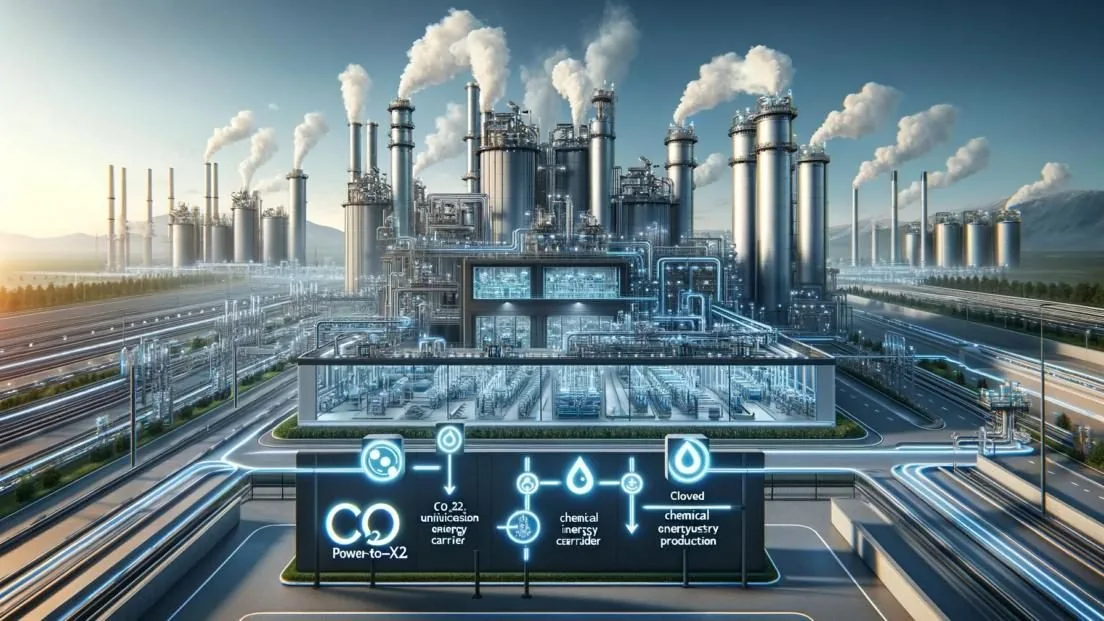
Carbon management could become an integral part of industrial plant design.
Potential infrastructure includes:
- Post-combustion carbon capture.
- Pre-combustion carbon capture.
- Direct air capture.
- CO₂ compression systems.
- CO₂ transportation pipelines.
- Geological storage facilities.
- Carbon utilisation processes.
Captured CO₂ could potentially be used in selected chemical and industrial applications, depending on economics, product demand and lifecycle emissions.
Carbon utilisation should not automatically be considered permanent carbon removal. The final destination and lifecycle of the carbon must be evaluated.
Pillar 4 – Industrial material recycling
Future manufacturing could increasingly incorporate:
- Recycled metals.
- Recovered process chemicals.
- Reusable catalysts.
- Recovered solvents.
- Recycled process water.
- Refurbished mechanical equipment.
- Remanufactured industrial components.
The design philosophy may shift towards equipment that is easier to maintain, disassemble, refurbish and reuse.
Pillar 5 – Intelligent resource management
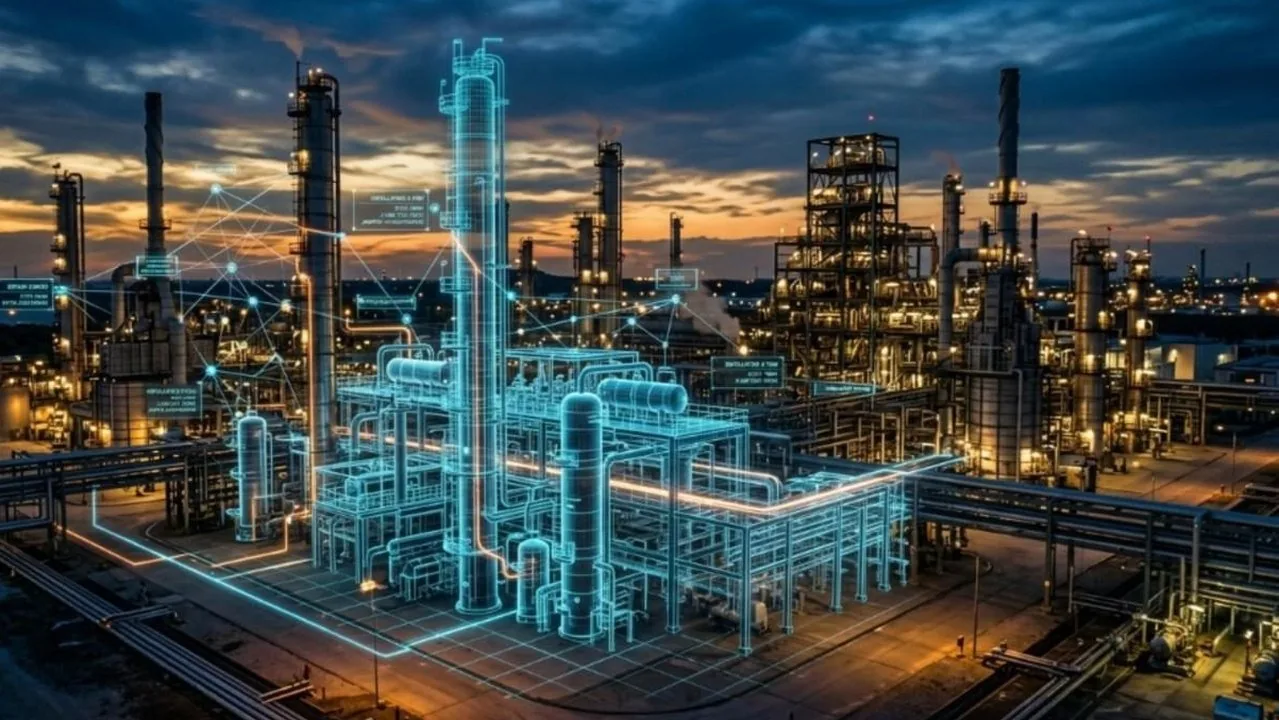
AI-based plant management systems could continuously evaluate:
- Energy consumption.
- Water consumption.
- Waste generation.
- Heat recovery opportunities.
- Material losses.
- Carbon emissions.
- Equipment efficiency.
These systems could identify opportunities to improve overall plant performance.
4. The industrial symbiosis network
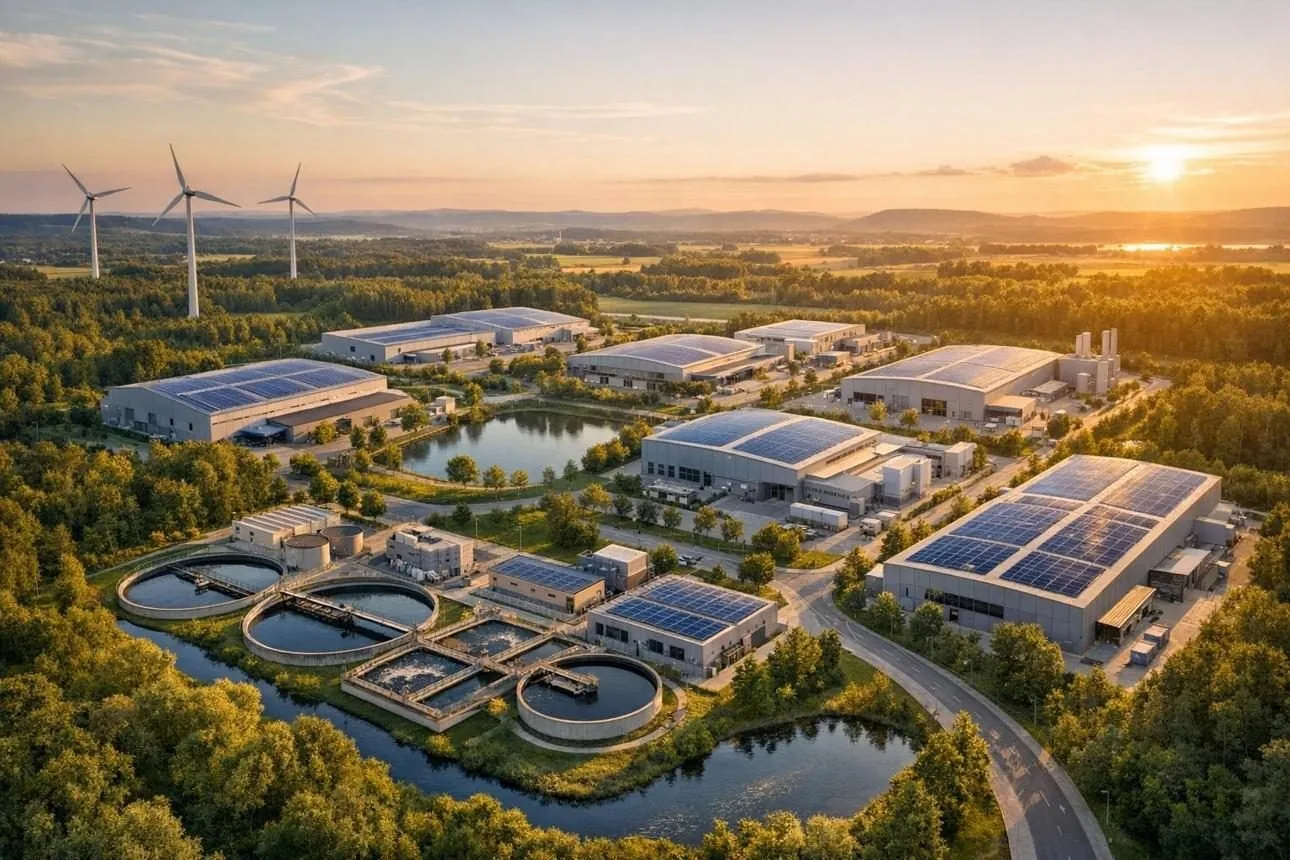
Imagine four industrial facilities located within a common industrial zone.
Facility A – Power Generation
Produces electricity, steam and recovered thermal energy.
Facility B – Chemical Manufacturing
Consumes steam and electricity and produces recoverable process heat.
Facility C – Hydrogen Production
Consumes renewable electricity and supplies hydrogen to industrial consumers.
Facility D – Water Treatment
Treats industrial wastewater and supplies recovered water to neighbouring facilities.
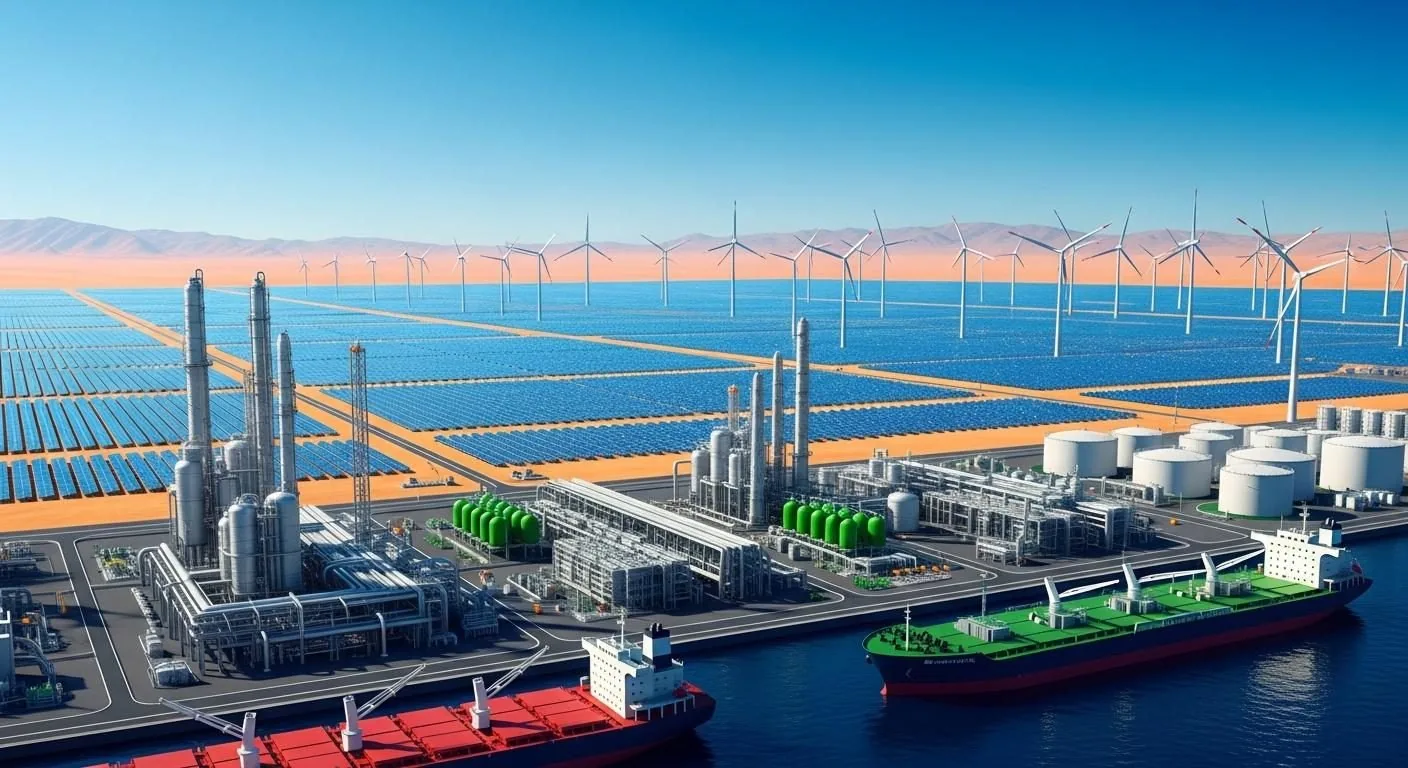
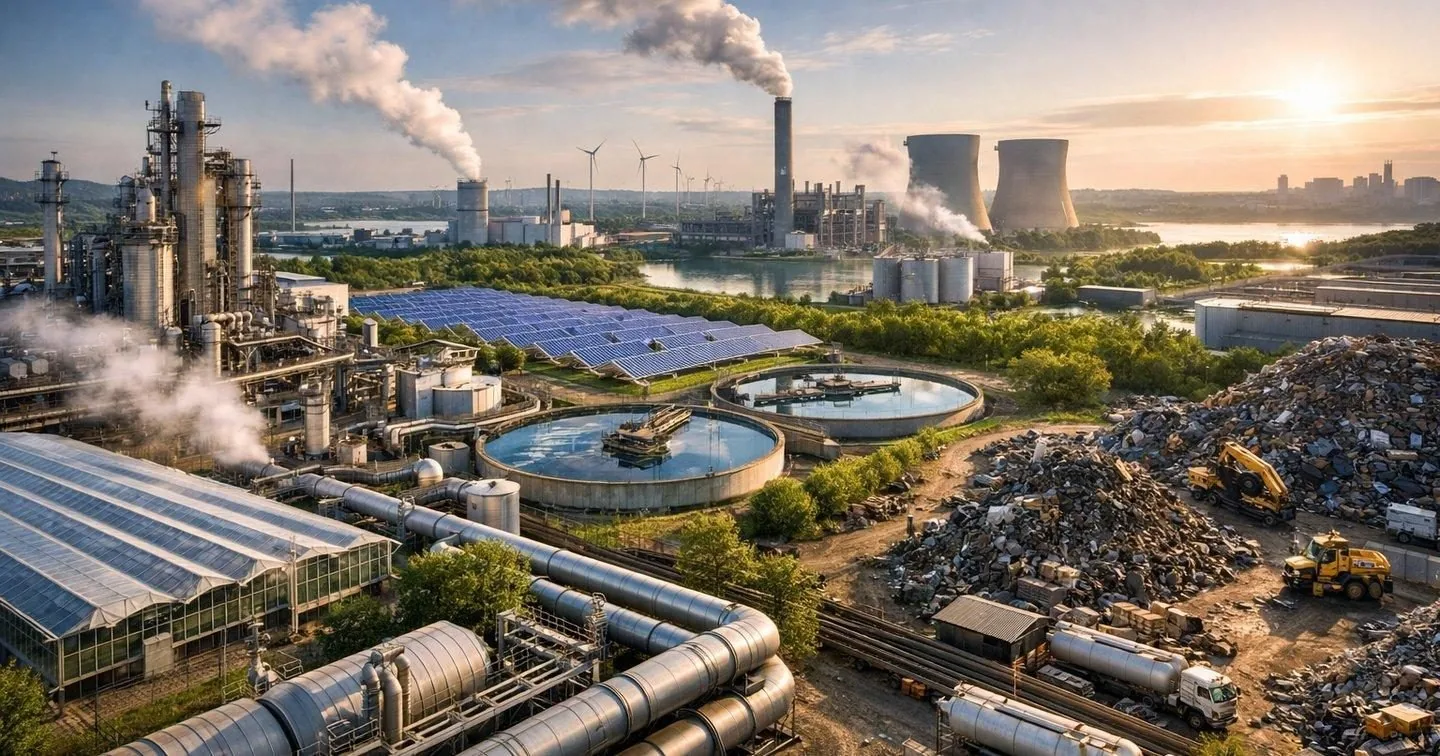
These plants could operate as one interconnected industrial ecosystem.
5. The engineering infrastructure behind circular industry
This transformation will require extensive engineering.
| Engineering discipline | Future applications |
|---|---|
| Process engineering | Heat integration, material recovery, carbon utilisation |
| Piping engineering | Recovered water, steam, hydrogen and CO₂ networks |
| Mechanical engineering | Heat pumps, compressors, filtration and recovery equipment |
| Instrumentation | Resource monitoring and intelligent process control |
| Electrical engineering | Renewable power and energy management |
| Civil & structural | Industrial utility corridors and treatment facilities |
6. The future utility network
A future industrial park could have shared utility infrastructure.
7. The future role of the piping engineer
Circular industrial systems could substantially increase the complexity of utility piping networks.
Engineers may need to design interconnected systems involving:
- High-temperature heat recovery networks.
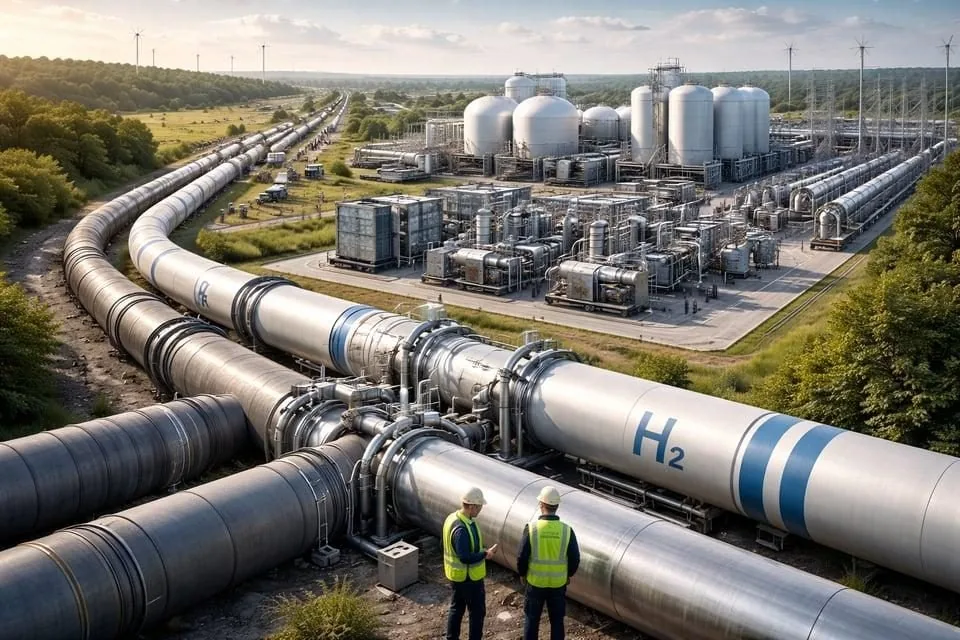
- Hydrogen distribution.
- Carbon dioxide transportation.
- Recycled process water.
- Steam and condensate recovery.
- Chemical recovery systems.
- Cooling water integration.
- Multi-plant utility connections.
The piping engineer will need to consider not only the requirements of an individual plant, but also the operating interaction between multiple facilities.
This could make piping layout, stress analysis, hydraulic analysis, equipment integration and support philosophy increasingly important.
8. The future industrial engineering philosophy
A zero-waste industrial facility will require a change in design thinking.
Traditional engineering asks:
- How do we process the feedstock?
- How do we manufacture the product?
- How do we dispose of the waste?
Future engineering could ask:
- How much of the feedstock can be recovered?
- How much energy can be reused?
- Can waste heat support another process?
- Can wastewater become a reusable utility?
- Can by-products become valuable feedstock?
- Can equipment be refurbished instead of replaced?
The plant design itself could be optimised around resource circulation.
9. Conclusion: The factory will become an ecosystem
The industrial plant of 2070 could be very different from the factories we design today.
Rather than operating as isolated production facilities, factories may become interconnected resource ecosystems.
Energy, water, materials and by-products could circulate across industrial networks.
The future industrial engineer will not simply design a production process. The engineer will design a system in which resources are continuously recovered, reused and optimised.